

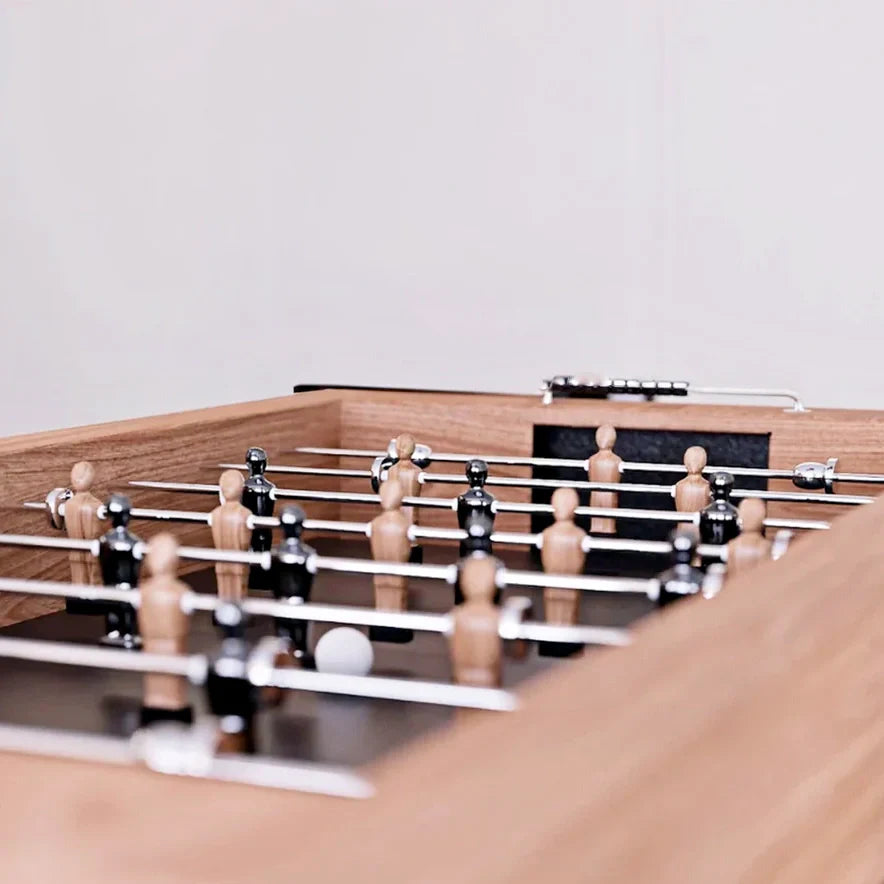


Luxury hotel game rooms are having a design-led second act. Once treated as a basement diversion or a family-resort extra, the game room is being reimagined as a polished social space—one that can feel as considered as the lobby bar, library or private dining room.
Look across leading properties from Aman, Four Seasons, Auberge Resorts, Montage and Ritz-Carlton Reserve and a pattern emerges. The names and formats vary: a billiards room, a game lounge, a pub and recreation venue, or a private villa entertainment suite. The common idea is more important. Play has become part of the luxury experience, and the pool table is often at its center.
The Game Room Never Really Disappeared
The traditional game room was built around equipment: a pool table, a television, perhaps an arcade cabinet. The new luxury hotel game room starts with atmosphere. Materials, lighting, furniture and service establish the mood; games give guests a reason to stay.
That distinction matters. Luxury hospitality is at its best when a space creates an experience without demanding an itinerary. A billiards room can hold a ten-minute break before dinner, a rainy afternoon with family or a late-night match over cocktails. It gives strangers and friends an easy way to interact while still allowing people to watch, talk or simply enjoy the room.
It also answers a practical design question: how can a hotel create social energy away from a screen? A beautifully chosen billiards table works as both activity and furniture. Even when nobody is playing, it anchors the room.
Amanzoe: Play Without Breaking the Design Language
At Amanzoe in Greece, the games room is presented as part of the resort experience rather than as an afterthought. Aman’s official materials describe a space for billiards alongside books, puzzles and board games; its experience guide also lists table tennis, foosball and air hockey, with a screening room nearby.
The lesson is not that every luxury property needs the same menu of games. It is that recreation can live inside a strong design language. At Amanzoe, the billiards table sits comfortably within a composed interior rather than turning the room into a themed arcade. The activity serves the architecture, and the architecture elevates the activity.
For hotel designers, that is the central challenge: guests should recognize the room as part of the property before they recognize it as a game room.
Four Seasons: From Billiards Room to Entertainment Suite
Four Seasons shows how broadly the idea can scale. At Casa Tesoro at Four Seasons Resort Punta Mita, a family lounge includes a billiards table while a separate game room adds ping pong, air hockey and video games. The residence also includes a private cinema, wine cellar and a Studio 54-inspired speakeasy. Here, the game room belongs to a complete private-entertainment sequence.
At the other end of the spectrum, The Wager at Naples Beach Club, A Four Seasons Resort, combines pool tables and arcade games with bowling, cocktails and food. It functions less like a secluded rec room and more like an active social destination within the hotel.
These two examples reveal why “game room” is now too narrow a label. In one property, it is a private amenity that makes a villa feel complete. In another, it is a hospitality venue capable of creating energy, dwell time and memories.
The Adult Game Room Becomes a Social Venue
The most compelling luxury hotel game rooms do not separate play from hospitality. They combine it with comfortable seating, drinks, music and a strong point of view.
At Bowie House, Auberge Resorts Collection, the Billet Room gives the classic game room a refined, Western-inflected setting with billiards and game tables designed for social gatherings. At Montage Deer Valley’s Daly’s Pub & Rec, bowling, vintage arcade games and traditional bar games sit alongside a full bar and dining.
Both spaces understand something important: adults rarely need more entertainment options. They need a reason to spend time together. Billiards supplies rhythm without dominating the conversation. A guest can play, watch, order a drink or move between groups without the formality of a seated event.
Three Forms of the Modern Luxury Hotel Game Room
Current examples generally fall into three useful categories:
- The family game zone. This format mixes billiards with board games, table tennis, foosball or age-appropriate digital play. It works best when it serves different generations without looking juvenile.
- The adult social lounge. Here, the pool table shares space with a bar, fireplace, dining or music. The goal is not simply recreation; it is a relaxed alternative to the conventional lobby lounge.
- The private villa entertainment room. In large residences, billiards becomes one part of an immersive suite that may include a cinema, wine room or bar. Villa Guayacan at Nekajui, a Ritz-Carlton Reserve, pairs a private game room with a home cinema and dedicated residential-style service.
The right type depends on the guest journey. A resort may need a flexible family space for long afternoons, an urban hotel may benefit from an evening social venue, and an ultra-luxury villa may use a private game room to make the residence feel genuinely self-contained.
Why Billiards Works So Well in Luxury Hospitality
- It creates instant social permission. Asking someone to join a game is easier than manufacturing conversation in a formal lounge.
- It fits different lengths of stay. Guests can play one quick frame or settle in for an evening.
- It crosses generations. The rules are familiar, the pace is approachable and spectators remain part of the experience.
- It gives the room a visual center. A well-designed table provides scale, symmetry and material presence.
- It connects naturally to food and beverage. Pool works beside a cocktail bar, private dining area or casual pub without requiring programmed entertainment.
Few pieces of hospitality furniture can do all of those jobs at once. That is why the billiards table has survived changing tastes while many novelty amenities have not.
What Hotel Designers Get Right About Game-Room Design
The best hotel examples offer a useful playbook for residential and hospitality interiors alike.
- Choose one hero piece. Start with the table and let its proportions, finish and silhouette establish the room. A modern table can read as architecture rather than equipment.
- Protect the playing zone. Comfortable cueing clearance should guide the plan before sofas, stools or occasional tables are placed.
- Layer the lighting. Even illumination over the playing surface matters, but ambient light around seating is what makes the room inviting after the game ends.
- Design for spectators. A game room succeeds when nonplayers want to remain. Lounge seating, drink ledges and clear sightlines turn a match into a social occasion.
- Hide the clutter. Integrated cue storage and discreet homes for balls, triangles, remotes and board games preserve the calm of the interior.
- Repeat the property’s materials. Stone, timber, metal, leather and upholstery should connect the room to the wider hotel rather than announce a separate theme.
The same principles apply at home. Our guide to designing a luxury game room that feels like part of the interior goes deeper into layout, lighting, materials and storage.
From Hotel Amenity to Residential Inspiration
Luxury hotels are useful design laboratories because every square foot must earn its place emotionally and operationally. The renewed billiards room does both. It creates a memorable visual moment, supports multiple kinds of guests and turns unstructured time into an experience.
For homeowners, the takeaway is equally clear: a game room does not have to look like a game room. Begin with the atmosphere you want—gallery-like, clubby, coastal, minimal or warmly residential—then choose a table that belongs in that language. Today’s modern pool tables make that approach possible, with forms and finishes designed to stand alongside serious furniture.
The future of the game room is not louder or more crowded. It is more intentional: one beautiful table, comfortable company and a space that makes people want to stay.
Frequently Asked Questions
Do luxury hotels have game rooms?
Yes. Amanzoe, Four Seasons, Auberge Resorts, Montage and Ritz-Carlton Reserve all offer examples, ranging from family game areas to adult social lounges and private villa entertainment rooms. The format varies by property and guest experience.
Why do luxury hotels include billiards tables?
A billiards table combines recreation, social interaction and visual impact. It can anchor a room, work across age groups and complement bar, dining or lounge service without requiring a scheduled activity.
What belongs in a luxury hotel game room?
A strong luxury game room starts with a focal game, generous playing clearance, layered lighting, comfortable spectator seating and concealed storage. Additional games should support the intended audience rather than overcrowd the space.
Featured image: Photo by Ariel Domenden on Unsplash, used under the Unsplash License. The image depicts a contemporary residential billiards room, not an Aman property.
0 comments